
Remembering Augusta Savage
Creative currents & the power of working with what you have

Dear Friend,
Before it’s gone, happy Black History Month in this fiery year of 2,026.
You’ve been in my thoughts.
I hope you’re balancing the good-good joys with any potential grief stirred up by this turbulent time.
I’m holding both, for sure.
And have been thinking about creativity as a kind of electric current — a divine transmission that travels from one generation to the next.
The good news is we are never starting from scratch.
The stories of our ancestors carve a path for us to follow.
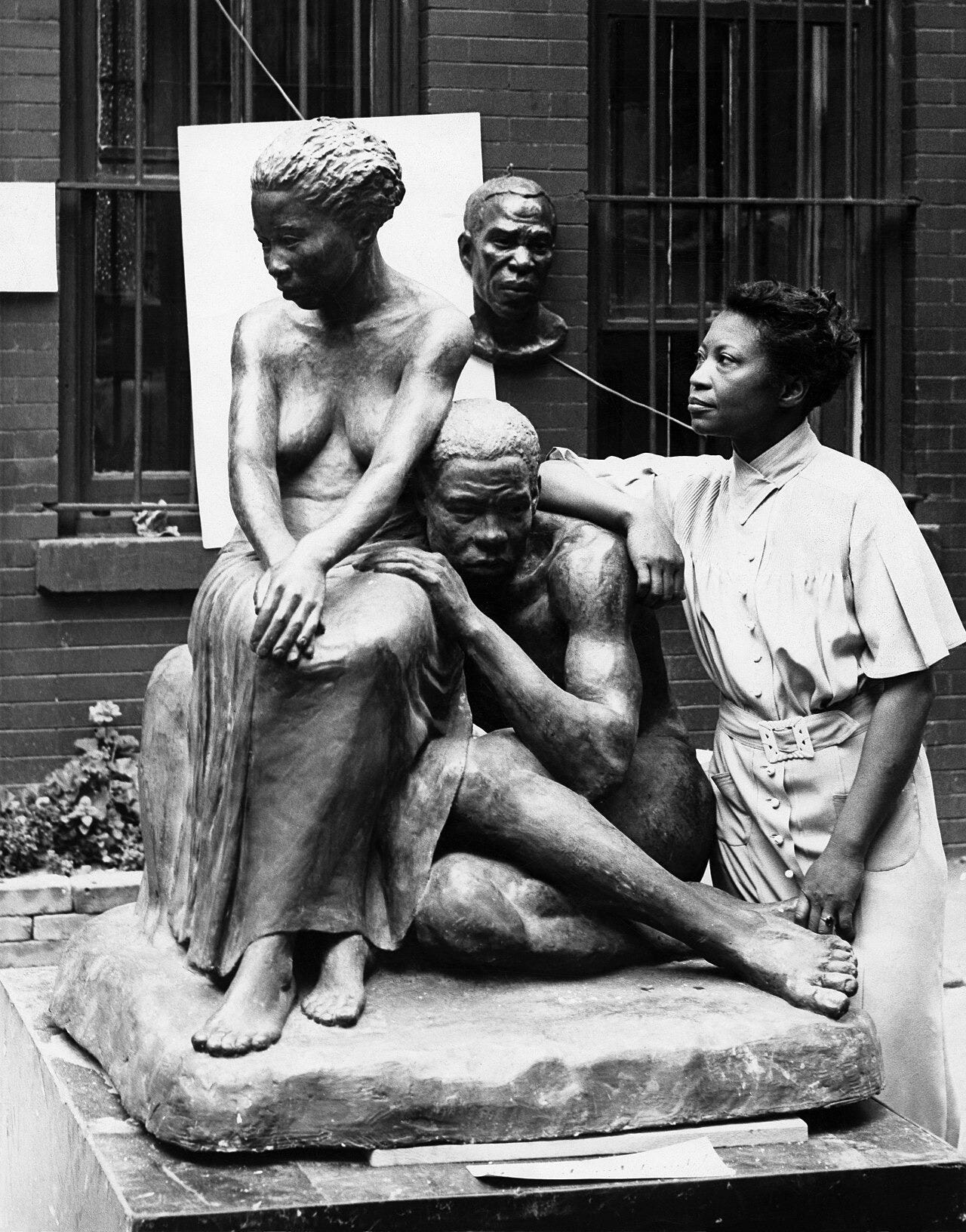

Augusta Savage has been on my mind.
Born on February 29, 1892, she shares a birthday with my maternal grandfather.
While our timelines never overlapped, I feel a creative current that connects her story with mine.
We both came to clay as children.
As a little person, she shaped small animal sculptures from red clay found in her backyard.
Her family did not encourage this talent, but still, she created.
Thankfully, I grew up with a mom who nurtured my interests the best she could. Even though we didn’t have a lot, being creative was never seen as frivolous.
When I was seven or eight, she took me to an art class where I made a small elephant out of polymer clay.
I still remember the weight of it.
We both migrated, picked up, and moved away from the familiar to birth a new version of self.
Augusta moved to Harlem in 1921 to pursue her dream of becoming a sculptor.
I moved to Detroit in 2021 to pursue a vision with many layers; ceramics being one of them.
When she arrived in New York, she had $4.61 to her name.
Augusta got a job cleaning houses, then applied to Cooper Union, a competitive college with no restrictions based on race and gender — and offered free tuition to boot. She was accepted and offered a scholarship that helped her pay living expenses.
She lived and worked out of a small studio apartment, where she earned a reputation as a portrait sculptor, creating busts of big personalities like W. E. B. Du Bois, Marcus Garvey, and also lesser-known people, like her nephew.
Savage was one of the first American sculptors fluent in the visual language of Black facial features.
While school provided access to stable housing, Augusta had to be creative with her finances nonetheless. A reality that I can relate to — deeply.
As a sculptor, it was and still is very common to have one’s work cast in bronze.
In the art world, bronzes are long-lasting, durable, and…expensive.
She couldn’t afford it.
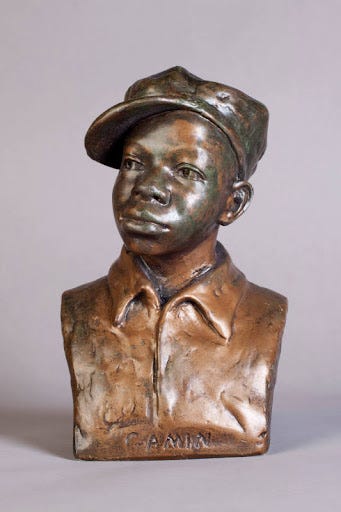
And at a glance, this sculpture looks like bronze, but it’s not.
Augusta created it with plaster, then covered it in brown paint mixed with shoe polish to create a faux bronze effect.
Ah, yes. A seemingly small but significant moment when a Black woman takes nothing and turns it into something meaningful, valuable, and original.
As an artist and art historian, I’ve witnessed this phenomenon many times.
Creativity improvises.
And Black women know how to make a (delicious) meal out of scraps.


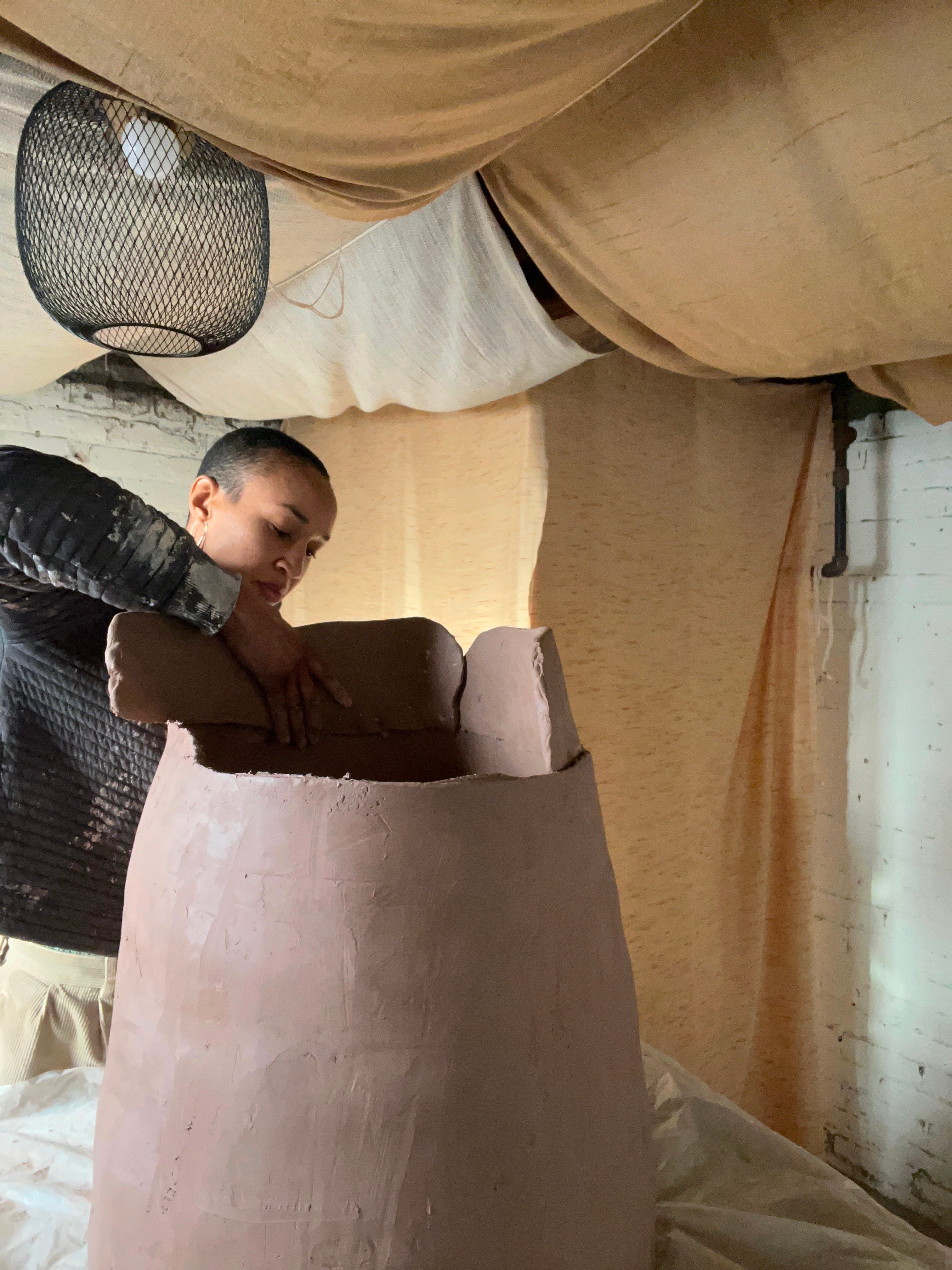
Perhaps Augusta has been heavy on my mind because my hands have been in clay more often these days.
Channeling. Creating. Preparing for a collaborative exhibition at the end of March — building my largest sculpture to date (prayers welcome).
Sipping from her story reminds me to trust the electric current of creativity, knowing that it does not always flow in a straight line.
But bends over time to reveal the experiences, lessons, and wisdom meant for us.
Some Questions for Your Journal:
Who from the past feels like kin to you?
Whose life feels like a blueprint for yours? What do you have in common?
Reflect on a moment in your life when you had to work with what you had. What was memorable about that experience?
Thank you for introducing me to Augusta Savage. I'm happy to know about her work and contributions -- and wow, I would never have been able to tell that that sculpture wasn't cast in bronze. How fascinating.
We're in a chapter of life which is incredibly rooted in working with what we have, as we continue to build our house and find ways to repurpose materials and reimagine what could be done with scraps and pieces that others might see as trash. While rooted in the goal of reducing waste, I see a kinship between this practice I am cultivating and some of the words you have shared here.
Thanks for this Saturday inspiration on a hard day (in a hard year.)
What a beautiful offering. I didn’t know about her, thank you for sharing her story and yours!